中文
中文 021-6525 3206
Software Installation FAQ

Technical Support
 Your current location: Home > Technical Support > Practical explanation/FAQ > CF flange faste...
 CF flange is a common type of flange standard in the ultra-high vacuum industry. After years of development, although the naming methods in different regions are different (such as NWCF, ICF, etc.), an industry standard has been formed worldwide. Its advantages are all-metal sealing, high temperature resistance, corrosion resistance, and extremely high vacuum (10-12 mbar) under appropriate operating conditions. However, its disadvantage is that it is relatively complicated to install compared to ISO and KF standards. If it is not installed properly, it will greatly affect the vacuum degree. In this issue of the official account, we will introduce the CF flange fastening installation operation steps and precautions.
CF flange
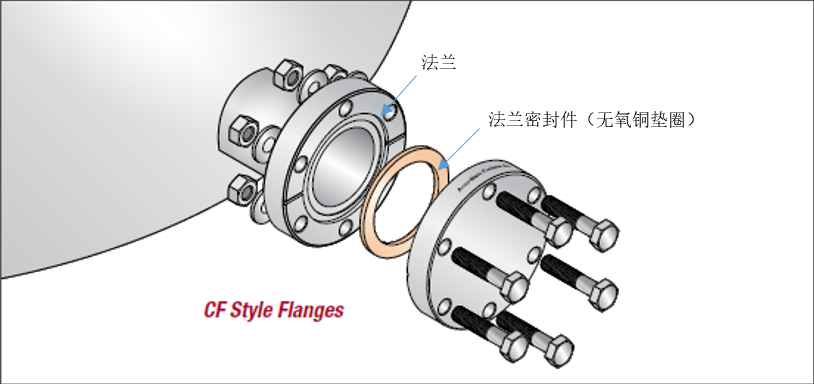
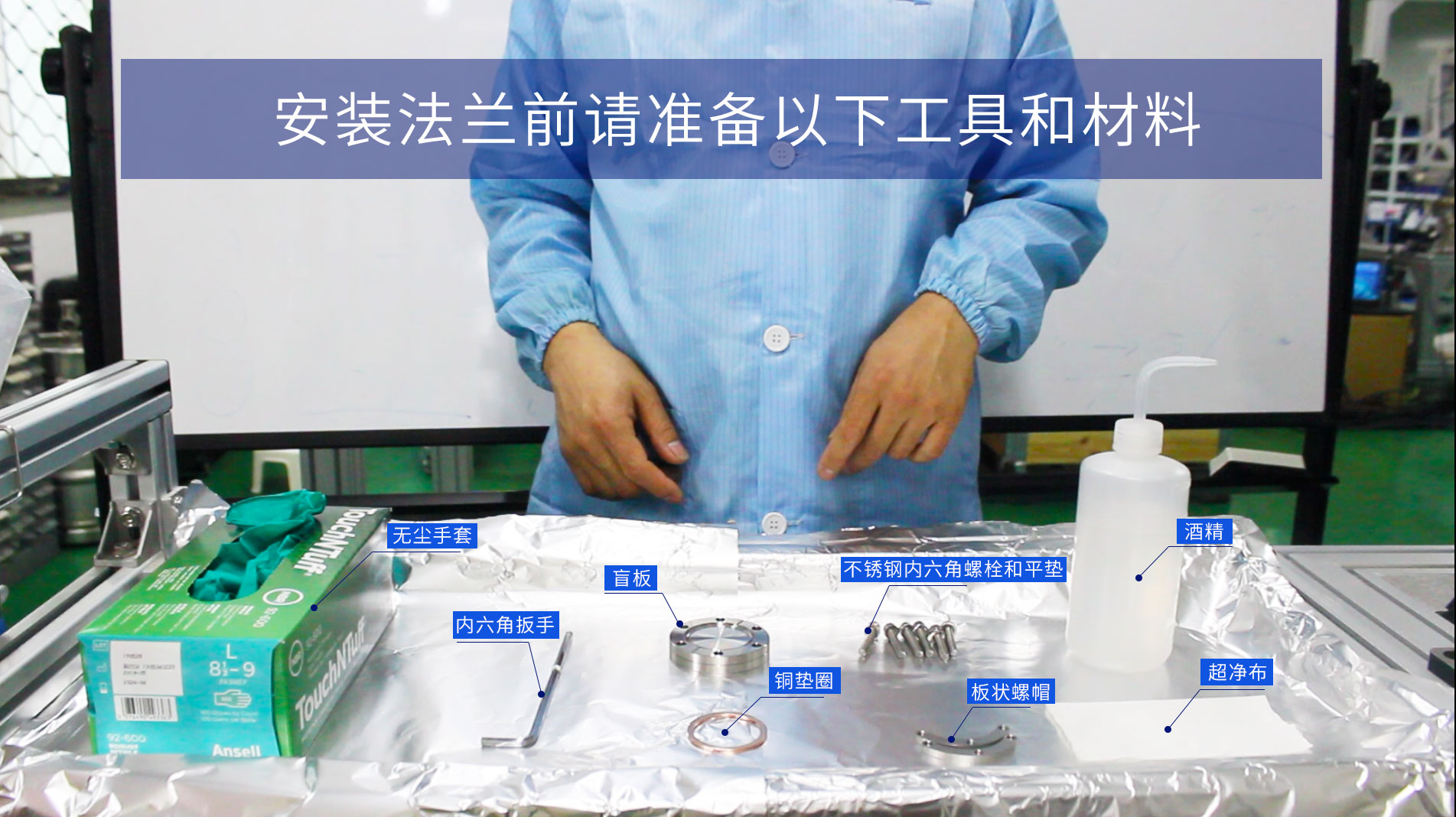
CF flange installation method
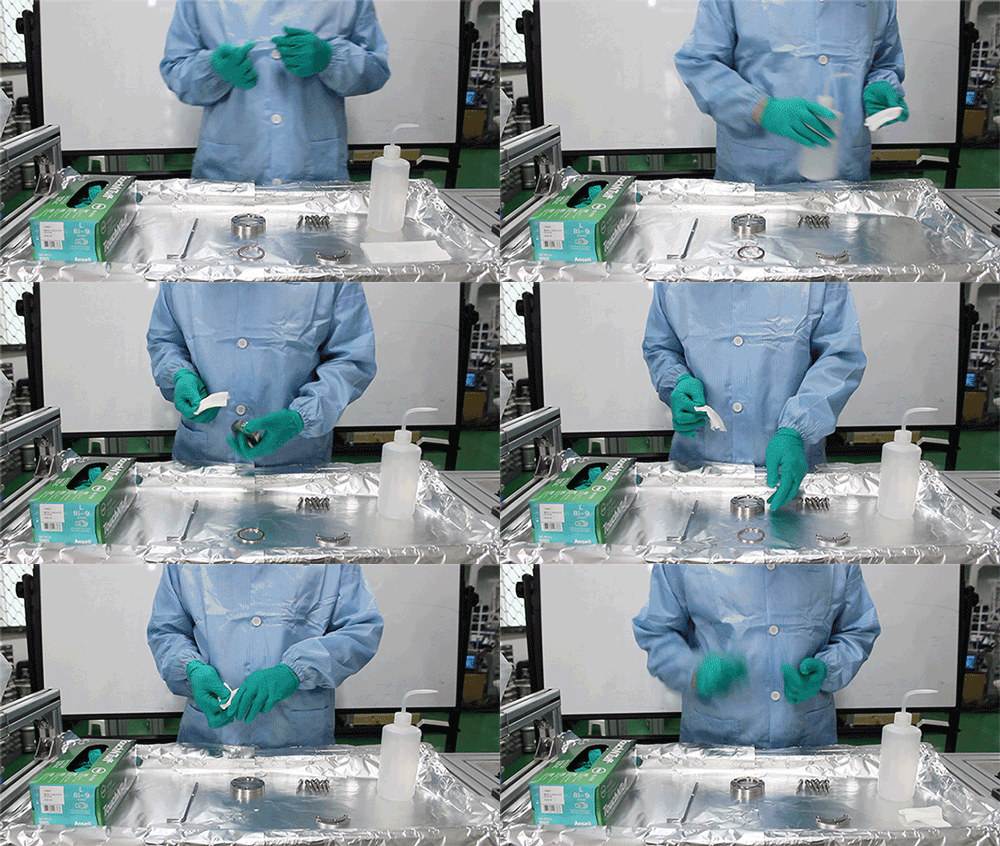
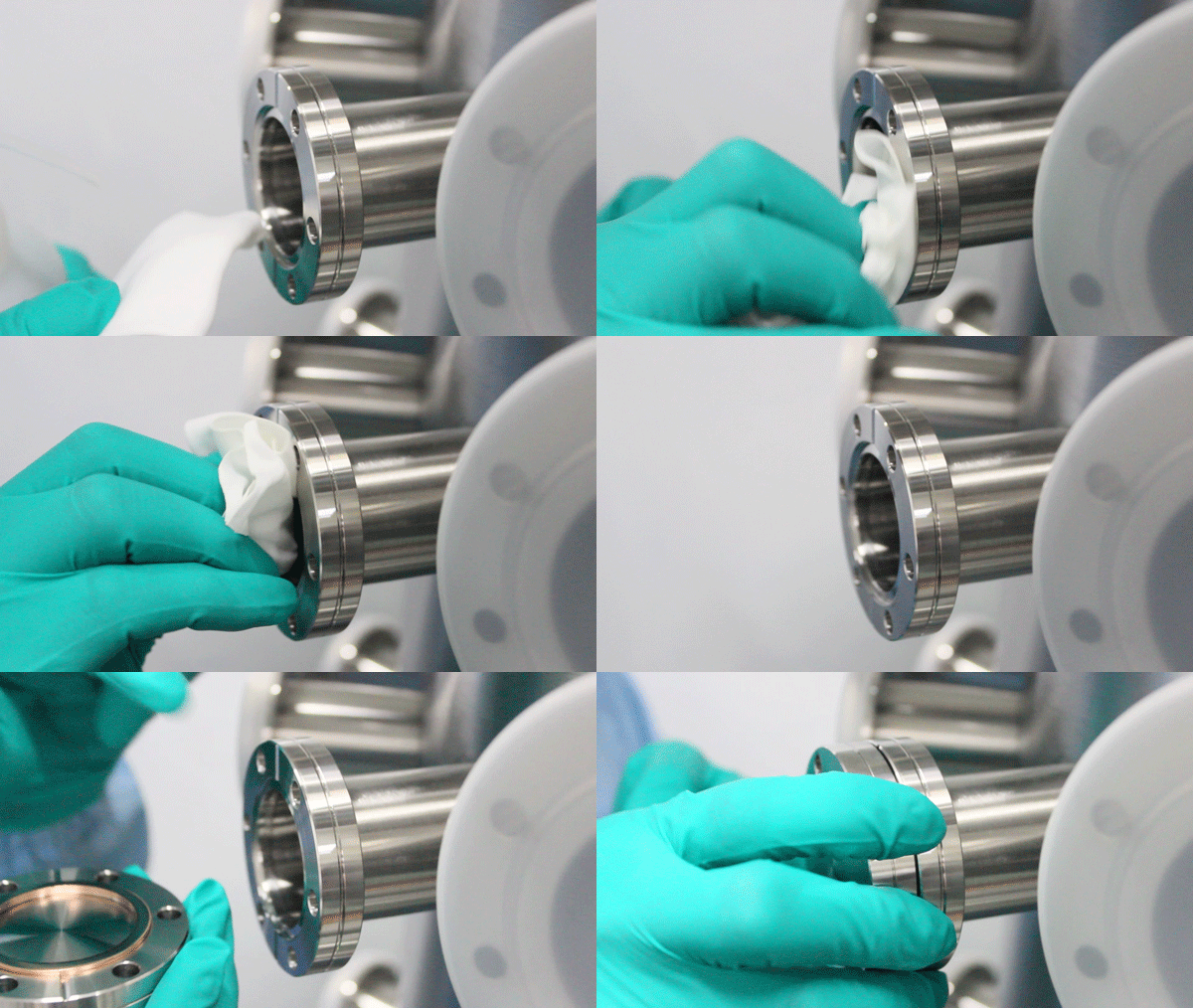
*In the second and third steps, it is necessary to check whether the sealing blade and copper gasket are intact and without scratches. If there are any abnormalities, the installation must be stopped. Defects in the copper gasket or flange will not only cause the vacuum to fail to meet the standard, but may even damage the matching flange.
Step 4: Insert the 304 stainless steel hexagon socket bolt M6*35 with a gasket into the through hole, and fix the other side with a plate nut (or M6 nut), screw the bolt into the plate nut (or M6 nut), and tighten the bolts crosswise; tighten each bolt clockwise 1/4 or 1/2 turn at a time with appropriate tightness.

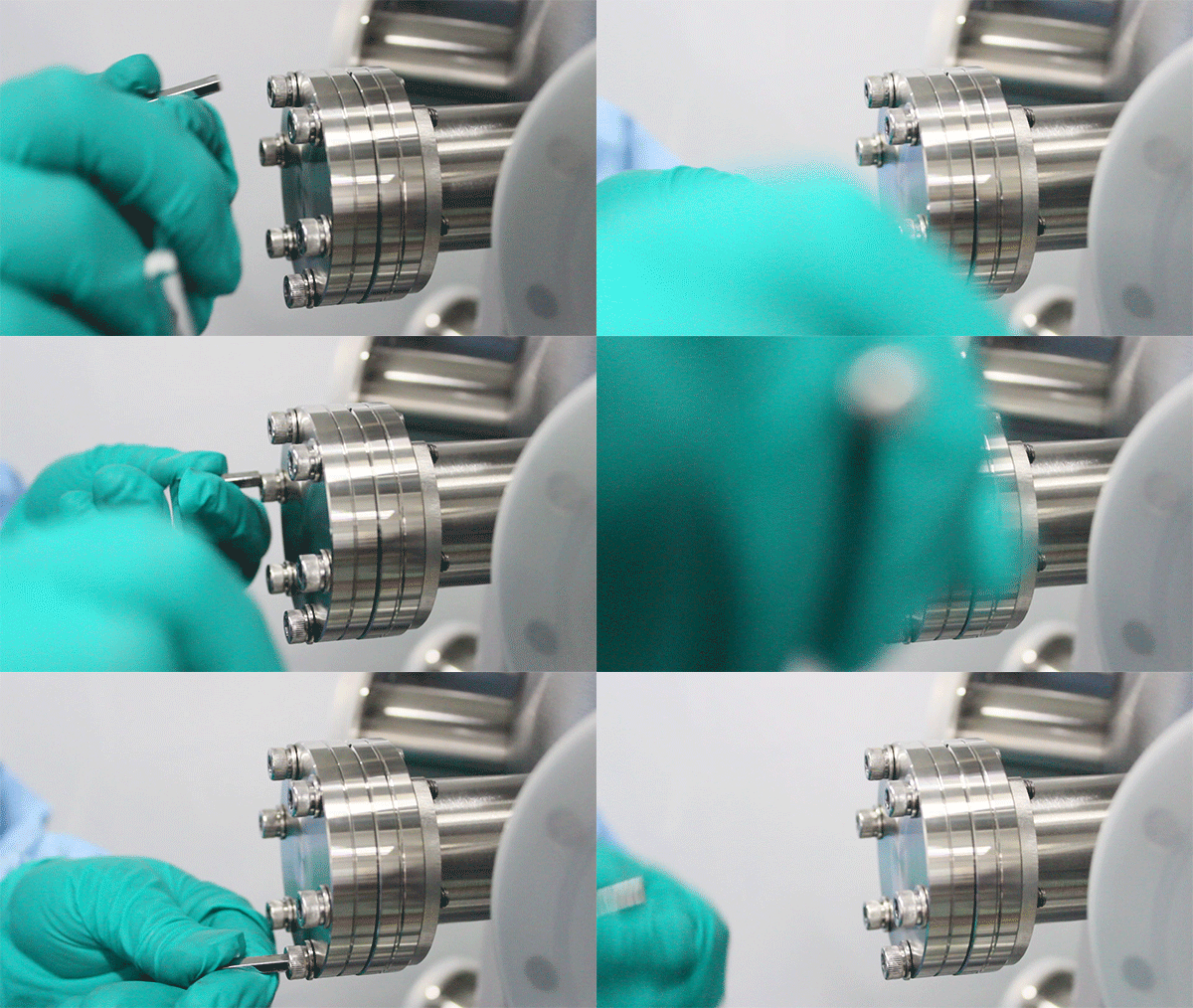
If possible, we strongly recommend the use of a torque wrench to complete the installation of the CF flange. According to the recommendations of some manufacturers, the tightening torque can be referred to as follows (www.lesker.com)
| Flange outer diameter O.D. | Bolt torque (ft-lbs.) | |
| inch | mm | |
| 1-1/3 | 34 | 7 |
| 2-3/4 | 70 | 12 |
| 4-1/2 | 114 | 15 |
| 6 | 152 | 15 |
| 8 | 203 | 15 |
| 10 | 254 | 15 |
< 1. When setting up the vacuum system, you must wear clean clothes, clean hats, and gloves, because slight fingerprints or other stains can greatly affect Vacuum degree; 2. Before installation, carefully check the surface finish or roughness of the blind plate, flange edge and copper gasket. No bumps, scratches, marks or other defects that affect the vacuum sealing performance are allowed. Make sure that the blade and copper gasket are free of defects before installation;
3. Choose different flanges according to different flange sizes The type of screws should be selected so that the length of the screws protrudes 1~2mm from the nut;
4. When bolts, nuts and washers are assembled with flanges, molybdenum disulfide lubricant should generally be added between bolts and nuts;
5. When tightening flange screws, force must be applied evenly. For small flanges For example, for flanges of size CF16-63, the screws can be tightened step by step in sequence. However, for larger flanges, such as flanges of size CF150 and above, diagonal tightening is required to avoid uneven force on one side. Uniform, affecting the sealing effect;
6. For parts with ceramic or glass seals, such as feedthrough or windows, it is recommended to use annealed copper washers, which can reduce the compressive stress inside the seal and reduce the chance of damage; < If you need to purchase copper washers and plate nuts, please send an email to info@fermi.com for consultation.
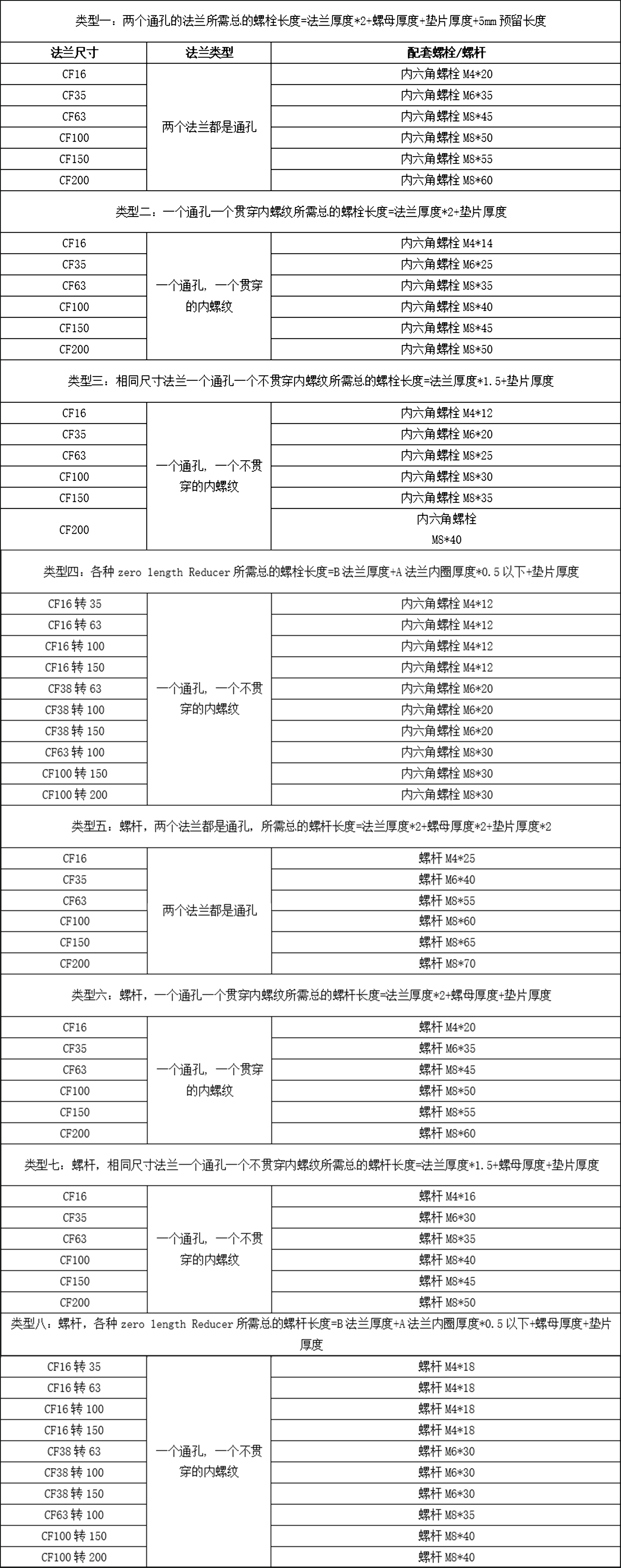
The following is the table of bolt/screw lengths corresponding to the CF flange sizes commonly used by Feminian Instruments (for reference only)